How to Choose a Home Blood Pressure Monitor
Check the exact model, validation status, and cuff range before buying a home blood pressure monitor. Learn when a wrist monitor may be an option.
Last updated
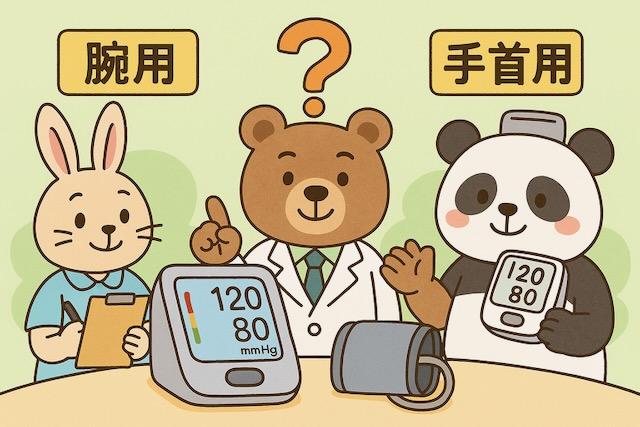
For most people, start with a clinically validated automatic upper-arm monitor. Measure around your upper arm and check the size range on the cuff that comes with the exact model you intend to buy. (American Heart Association home monitoring guidance)
What to check before you buy
- Look up the exact model number. The STRIDE BP database lists validated devices and lets you check availability by country. In Japan, the Japanese Society of Hypertension publishes information on validation testing of devices sold domestically. (STRIDE BP validated device list) (Japanese Society of Hypertension)
- Check the cuff range. A randomized trial found that a cuff that was too large could read low, while a cuff that was too small could read high. Ask whether an appropriately sized cuff is available for that model. (Cuff(SZ) randomized crossover trial)
- Check that you can apply it yourself and read the display. Memory and app sync can make logging easier; a written record works for people who prefer paper.
When a wrist monitor may make sense
The American Heart Association generally recommends upper-arm devices. A validated wrist device may be an option when an upper-arm cuff does not fit or cannot be used for a medical reason. A clinician or pharmacist can help you choose. (American Heart Association) (ValidateBP wrist-device guidance)
Once you have the right cuff, use the same seated position and measurement schedule each time.
As an Amazon Associate, Tensai Japan earns from qualifying purchases.
Blood pressure monitor link from the original article (Amazon Japan)
Frequently asked questions
Does the brand alone tell me whether the monitor is accurate?
Look for validation of the exact model and check its cuff range for your arm circumference. (STRIDE BP validated device list)